



Xanthan Gum API 13A (oil drilling grade)
Property:
Xanthan Gum API 13A (oil drilling grade) is a polysaccharide produced by Xanthomonas through monosaccharide fermentation. It is a hydrocolloid polymer that is soluble in water. Because water is the basic carrier fluid in drilling mud, hydrophilicity is the basic characteristic of Xanthan Gum API.
Xanthan Gum API 13A is specially produced as a mud additive for oil drilling and exploitation. As an environment-friendly and high-efficiency mud additive, it has excellent tolerance to changes in temperature, acid, alkaline, and salt. It can extremely increase the product’s penetrating ability and suspending performance for small solid materials, and also reduce pressure loss during drilling. This product can not only fasten the wellbore but also decrease damage to oil formations, greatly raising the efficiency of drilling, workover, and completion.
As a biotype oil driver, Xanthan Gum API can improve the oil extraction rate and utilization factor of natural resources. More importantly, it further protects the natural environment.
CAS No.:
11138-66-2
Chemical Formula:
(C35H49O29)n
Structure Formula:

Core Functions:
As a viscosifier, Xanthan Gum API is widely used in drilling mud. Its core functions include:
- Viscosity Enhancement: Significantly increases the viscosity of the mud.
- Cuttings Carrying: Acts as an excellent carrier for drill cuttings. When mixed into water, xanthan gum swells, forming a gel-like consistency. This viscous mixture can trap cuttings in suspension, preventing them from falling onto the drill pipe due to gravity.
- Rheology Control: In oil drilling, Xanthan Gum API fluid products can control the rheology of drilling fluids. They enhance gel strength, thereby improving suspension. This helps transport ordinary drill cuttings as well as heavier gravel and pebbles, keeping the hole open and transporting cuttings outward.
- Other Industrial Uses: Including but not limited to glues, inks, and etc.
Specifications:
| Item | Index |
|---|---|
| Particle Size, Mesh | 40/60 |
| pH Value (1% Solution) | 6.0-8.0 |
| Loss on Drying | 13 Max. |
| 1% Solution Viscosity | 1200 Min. |
| RPM | Reading |
|---|---|
| 600 | 75 |
| 300 | 55 |
| 200 | 45 |
| 100 | 35 |
| 6 | 15 |
| 3 | 12.5 |
Applications:
As an efficient biopolymer, xanthan gum is widely used in drilling fluids due to its unique rheological properties. Below is an analysis of its key applications:
I. Characteristics
Superior Rheological Properties
- Shear Thinning: Reduces viscosity at high shear rates to lower pump pressure, while restoring high viscosity at low shear rates to effectively suspend cuttings.
- Suspension Stability: Prevents solid particle settlement and maintains borehole cleanliness.
Environmental Tolerance
- Salt/Ca²⁺/Mg²⁺ Resistance: Suitable for complex formations, including seawater or high-salinity formation water.
- Temperature Resistance: Withstands 80–120°C; requires synergistic stabilizers at higher temperatures.
Compatibility
- Works synergistically with additives like bentonite, PAC (polyanionic cellulose), and starch to optimize fluid loss control.
II. Methods
Preparation Process
- Premixing: Slowly add xanthan gum to fresh water (recommended concentration: 0.1%–0.5%), and mix at high speed for 20–30 minutes until fully dissolved.
- Mixing Sequence: First prepare bentonite-based slurry, then sequentially add xanthan gum, fluid loss agents (e.g., PAC), and lubricants.
- Parameter Adjustment: Monitor rheological properties in real time using a six-speed rotational viscometer and adjust dosage dynamically.
Application Scenarios
- Directional/Horizontal Wells: High cuttings-carrying capacity reduces cuttings bed formation.
- Salt Gypsum Formations/Water-Sensitive Formations: Salt resistance protects borehole stability.
- Low-Solids Systems: Maintains suspension capacity while reducing solid content.
III. Dosage Ratios
| Application Requirement | Recommended Concentration (w/w%) | Auxiliary Additives |
|---|---|---|
| Conventional cuttings carrying | High-salinity environments | High-temperature intervals (< 120℃) |
| 0.1%–0.3% | 0.2%–0.4% | 0.3%–0.5% |
| Bentonite (4–6%) + PAC (0.2–0.5%) | Salt-resistant clay + sulfonated agents | High-temperature stabilizers + antioxidants |
IV. Typical Cases
Case 1: High-Temperature and High-Pressure Well in the North Sea
- Challenge: 4,500 m depth, 110℃ temperature, salt gypsum formations.
- Solution: 0.4% xanthan gum + 0.3% PAC + 5% KCl composite system.
- Result: Fluid loss reduced to 8 mL; cuttings carrying efficiency increased by 30%; no borehole collapse.
Case 2: Horizontal Well in Salt Dome Formations (Middle East)
- Issue: High Cl⁻ concentration (180,000 ppm) caused conventional polymer failure.
- Result: Stable rheological properties; ROP (rate of penetration) increased by 15%.
Case 3: Environmentally Friendly System for Shale Gas Wells
- Requirement: Low-toxic, degradable drilling fluid.
- Design: 0.2% xanthan gum + modified starch + vegetable oil-based lubricants.
- Outcome: Passed biotoxicity tests; cuttings return rate exceeded 95%.
V. Precautions
- Temperature Limitations: Add thermal stabilizers (e.g., sodium thiosulfate) when exceeding 120℃.
- Microbial Degradation: Use biocides (e.g., glutaraldehyde) during long-term drilling downtime.
- Economics: High concentrations may increase costs; balance performance with budget.
Packing and Storage:
Multiply paper bags, carton boxes, or cardboard drums with plastic lining (25kg net).
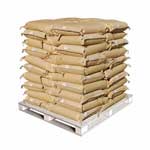
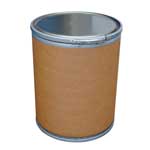
Avoid high-intensity extreme pressure and prolonged exposure to strong sunlight. Keep the container closed. Keep away from heat, sparks, and flames.